The Secret to Restoring Old, Faded Black Trim (That Lasts in the Texas Sun)
Black plastic trim is one of the first things to age on a vehicle, and here in Texas it happens fast. That relentless sun bakes the plastic day after day, drawing the oils out and leaving bumpers, mirror housings, cowl panels, and fender trim looking chalky, gray, and tired. A car with faded trim looks a decade older than it is, even when the paint underneath is still in great shape.
The good news: you almost never need to replace it. With the right product and a proper technique, faded trim comes back to life.
Why Black Trim Fades (Especially in Texas)
Automotive trim is usually a textured, unpainted plastic. It has no clear coat protecting it, so it takes the full force of UV, heat, and oxidation. Over time the surface oils evaporate and the plastic literally dries out at the top layer. That dried, oxidized surface scatters light instead of absorbing it, which is why it reads as gray or chalky instead of deep black.
In the Hill Country and San Antonio area, where a car can sit in direct sun for hours a day most of the year, this happens faster than in milder climates. UV is the main driver, and Texas has plenty of it.
Why Cheap Trim Dressings Do Not Work
Most trim shine products are silicone dressings. They sit on top of the plastic and throw a wet, greasy gloss that looks fine in the driveway and washes off in the first rain. Worse, they can leave a residue that attracts dust and, over time, actually accelerates the fading you were trying to fix.
A real restorer is different. Instead of coating the surface, it bonds into the plastic and restores the color from within, leaving a clean, matte, factory-style finish with no shine and no greasy feel.
Jen’s Take: The Product We Actually Trust
When it comes to restoring faded trim, very few products earn a permanent spot in the studio. Solution Finish Black Trim Restorer is one of them. This is not a greasy dressing or a quick band-aid. It actually restores color and depth to weathered plastic, rubber, and vinyl while leaving a clean, factory-style matte finish that lasts.
If your trim has turned chalky, gray, or tired-looking, this formula brings it back to life using a blend of advanced polymers and natural oils. There are no silicones, no high-gloss additives, and definitely no wet look. Just rich, deep restoration that looks OEM. It is body-shop safe, silicone-free, and holds up far longer than typical dressings, which matters a lot in our climate.
What It Works On
- Black bumpers and fender trim
- Mirrors, door handles, and window seals
- Rubber and vinyl components
- Mud flaps and running boards
- Truck bed caps and covers
- Wiper blades
- Exterior plastics that have faded or oxidized
How to Restore Faded Trim (Step by Step)
- Start clean and cool. Work on a clean, cool surface out of direct sun. Wash and dry the trim first. For greasy or heavily contaminated trim, prep with denatured alcohol so the restorer can bond.
- Protect yourself. Wear gloves and eye protection. These restorers will stain skin and clothing, so treat them with respect.
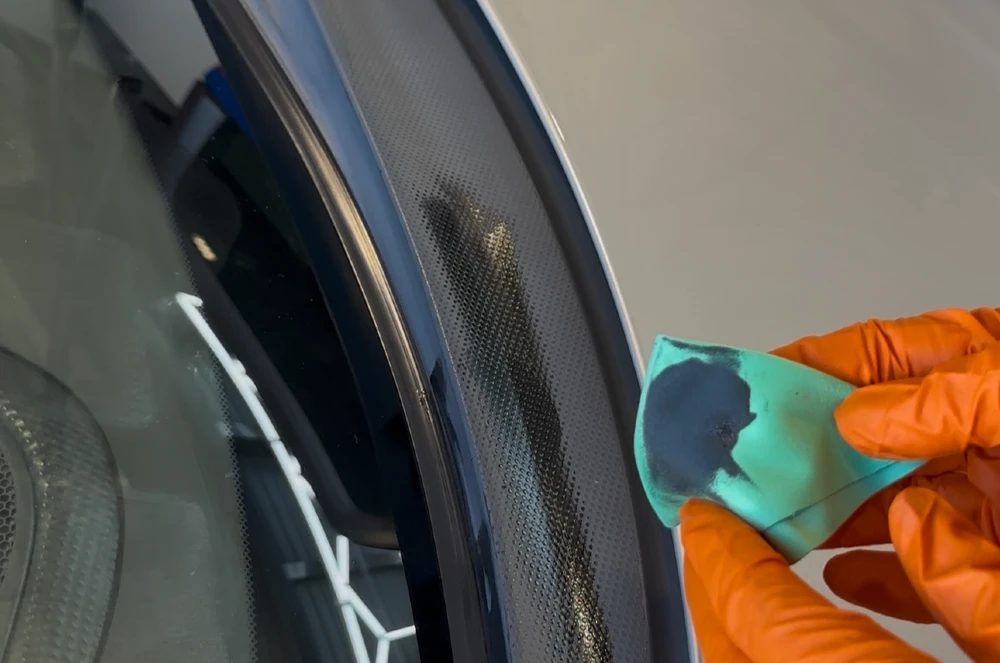
- Apply a thin, even coat. Shake the bottle well, put a small amount on a microfiber applicator, and spread a thin, even layer. A little goes a long way.
- Let it dwell. Allow the product to sit for one to two minutes so it can absorb into the plastic.
- Buff off the excess. Wipe away the excess with a clean microfiber pad. Immediately wipe any product off paint or glass, because it can stain unsealed surfaces.
- Keep it dry. Do not let the treated trim get wet for at least six hours so the finish can cure.
Make It Last
A quality restoration on well-prepped trim can last for months, but Texas sun is always working against you. Keeping the car washed, parking in shade when you can, and reapplying a couple of times a year keeps the trim looking deep and new. This step is also the go-to prep when we are getting a vehicle ready for a ceramic coating or for resale, because fresh, dark trim makes the whole car look cared for.
If your trim is too far gone, or you would rather have it handled along with a full detail, we restore trim as part of our exterior work at Carsmotology in Boerne, serving San Antonio, New Braunfels, and the surrounding Hill Country. Reach out and we will take a look.