PPF Removal on a Rare Audi RS4: Stripping 15-Year-Old Film in Boerne, TX
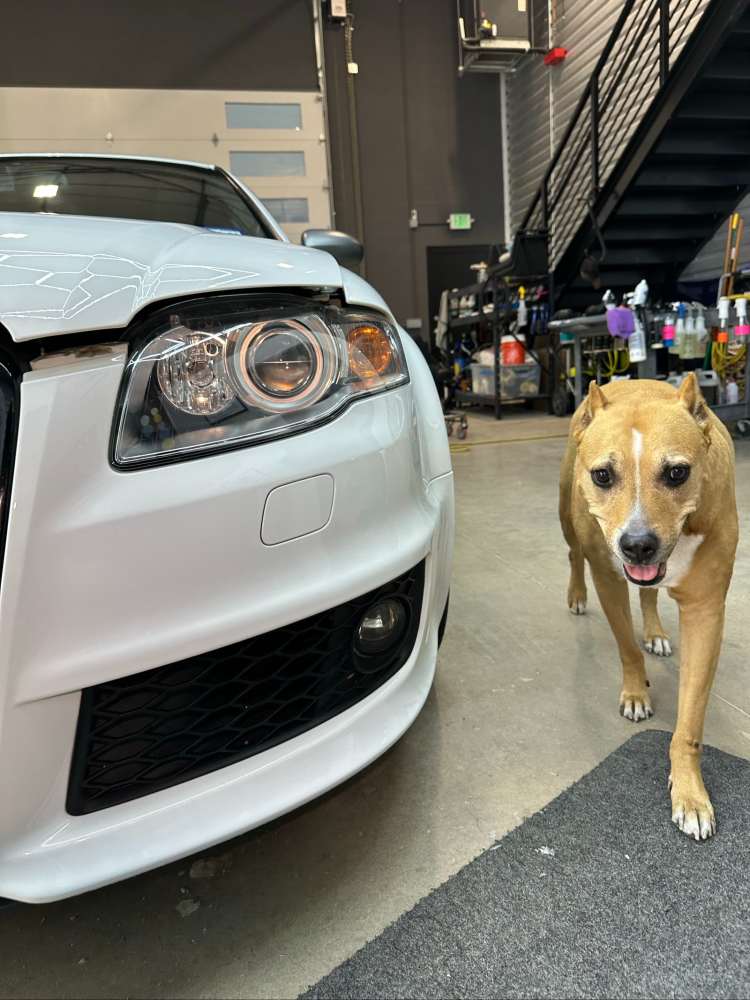
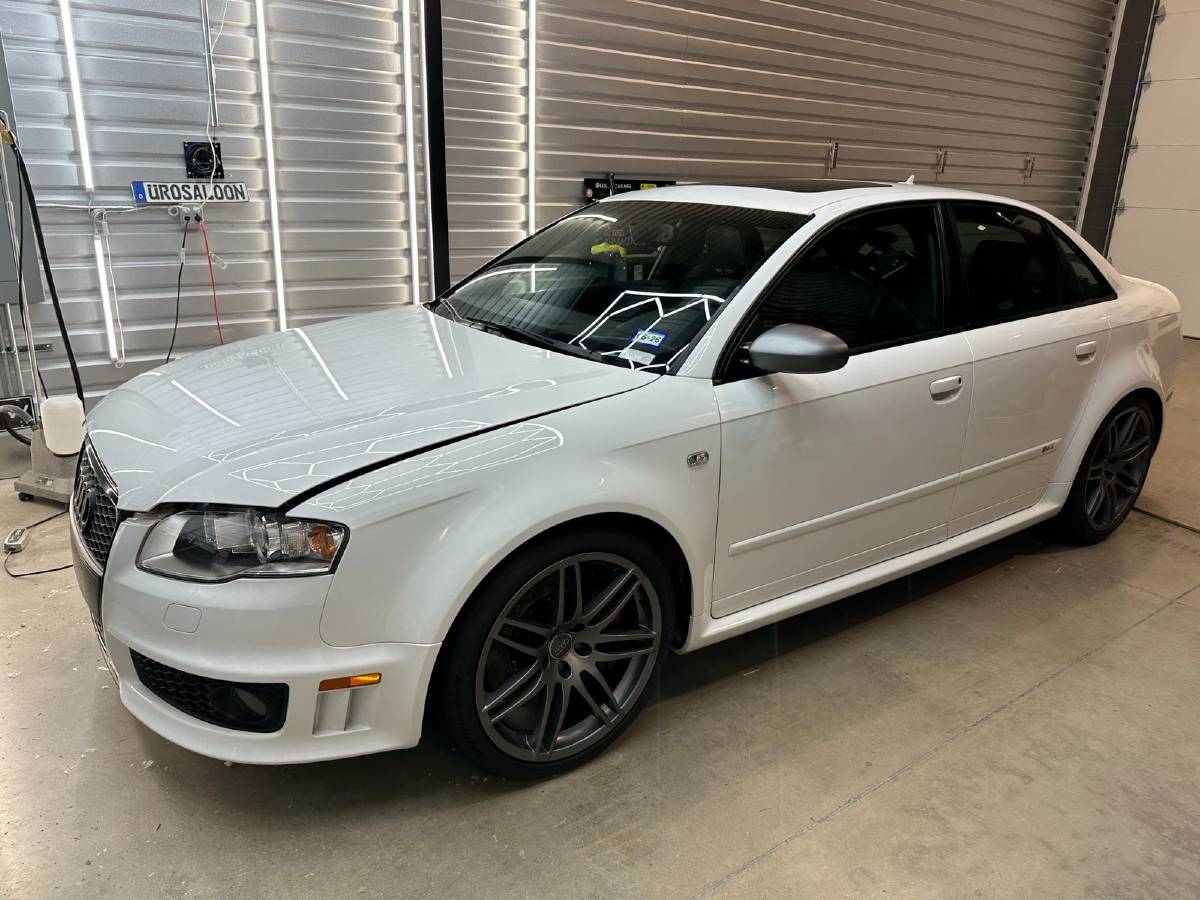
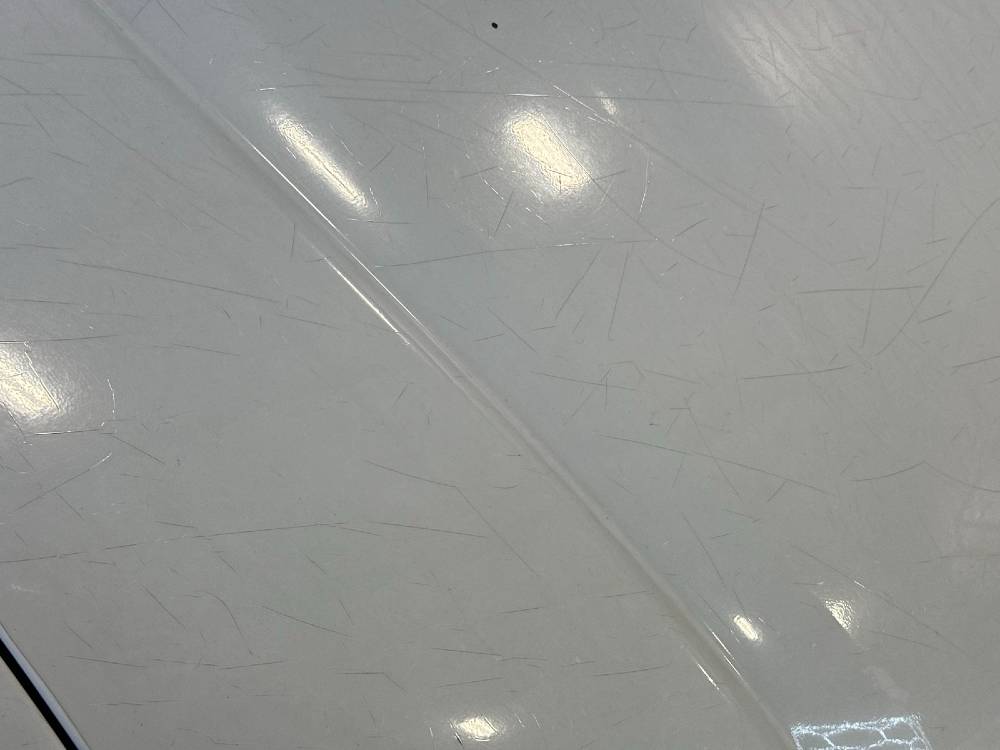
In more than 20 years in the auto industry, Jen had never had a job quite like this one. A white B7-generation Audi RS4 rolled into our Boerne shop still wearing paint protection film that had been on the car for roughly 15 years. The film had yellowed, cracked, and started separating into layers. Underneath it was paint nobody had seen in over a decade.
Jen is a lifelong Audi fan, and these sedans are rare, which raised the stakes. The goal was simple to say and hard to do: get every bit of old film and glue off this car without leaving a single mark in the factory paint, then make it look new again.
Quick Answer: How Do You Remove Old PPF Safely?
Old, cracked PPF comes off in stages. Start with a full decontamination wash, then soften the film with steam (a heat gun often fails on brittle, aged film), remove it in small sections, dissolve the leftover adhesive with an adhesive remover and a plastic razor blade, then polish the paint and protect it with a ceramic coating.
Why Does Old PPF Turn Yellow and Crack?
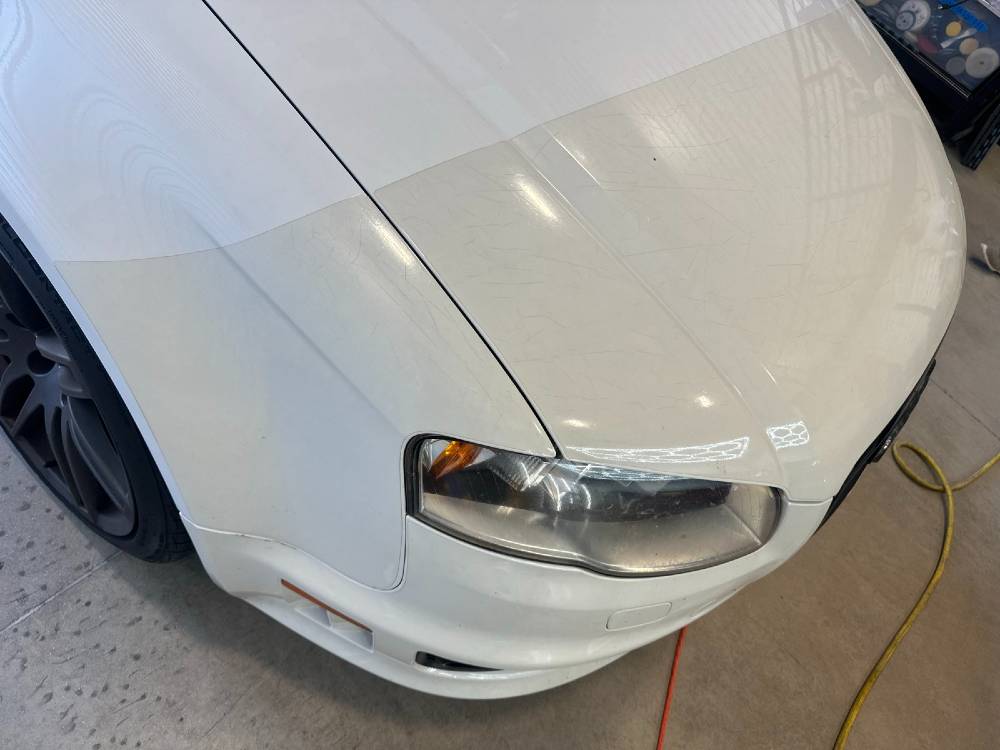
Paint protection film is a tough urethane layer with a clear topcoat, but it does not last forever. After years of sun, heat, and weather, that topcoat breaks down. The film loses its flexibility, turns yellow, and eventually cracks into a web of fine lines that looks a lot like shattered glass.
On a white car the yellowing is impossible to hide. You can see exactly where the film stops and the unprotected paint begins. The Texas sun speeds this up, which is one reason we always talk with customers about protecting paint from Texas sun damage and choosing a quality film from the start.
Step 1: A Full Decontamination Wash Comes First
Before we touch the film, the car has to be truly clean. We started with a thorough decontamination wash using an iron and fallout remover. On a white car this step is a little fun to watch. The remover reacts with embedded iron particles and bleeds purple right out of the pores of the paint, so you can see exactly how much contamination had built up.
After the chemical decon, we followed with a clay bar to pull out anything still bonded to the surface. Removing film from a dirty car is asking for trouble, because grit trapped at the film edges can drag across the paint.
Step 2: Why a Heat Gun Did Not Work (and Steam Did)
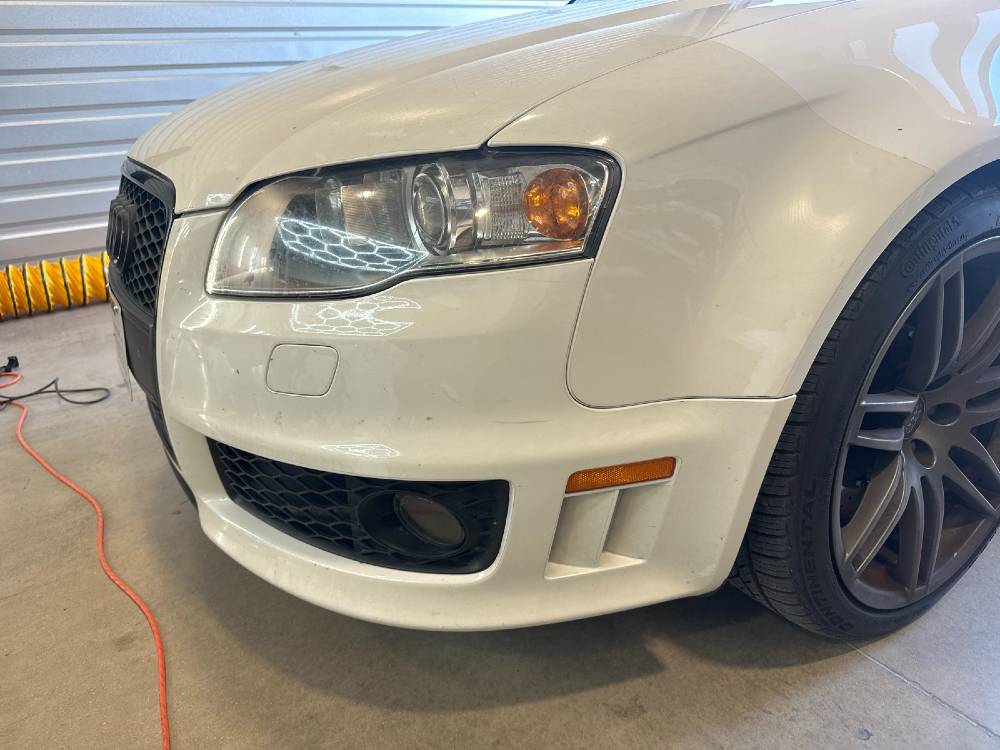
On newer PPF, gentle heat softens the adhesive and the film peels off in big sheets. That was the plan here too. It did not work. This film was so old and brittle that heat alone just made it break apart.
So we switched to a steamer. Steam delivers softer, more even heat to the film and the glue underneath, which let us start chipping the film away a little at a time. It took days. Aged PPF also separates into layers, so we would clear one layer only to find another, and then finally the adhesive layer still stuck to the paint.
Step 3: Removing the Adhesive Without Touching the Paint
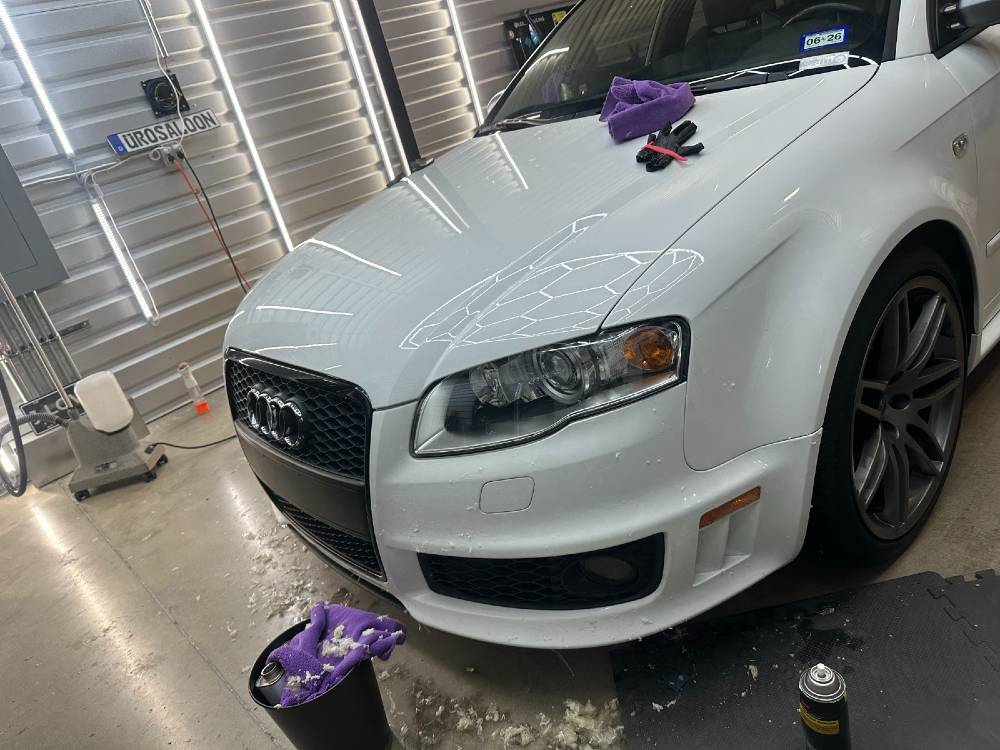
The adhesive layer is where most of the risk lives. We used a dedicated adhesive remover and a plastic razor blade, working very gently across every panel. Never a metal blade.
Here is the part a lot of people miss: heat softens your clear coat too. Anything sharp or aggressive on warm paint makes it much easier to scratch or gouge the finish, and that is the last thing you want on a car like this. The goal is for the paint to look as close to factory as possible when the film is gone.
Step 4: Polishing the Paint After PPF Removal
Once the film and glue were finally off, we could polish. The customer chose a one-step polish, which was a great call for this car. A one-step polish uses a single polishing step to remove light haze and bring back gloss without taking off more clear coat than necessary. (It is not the same thing as single-stage paint, which is a type of paint system.)
Paint that lived under film for years is often in good shape, but the edges where film met exposed paint can look slightly different. Polishing evens that out so the whole car reads as one consistent finish. If your paint needs more than a one-step, that is where full paint correction in Boerne and San Antonio comes in.
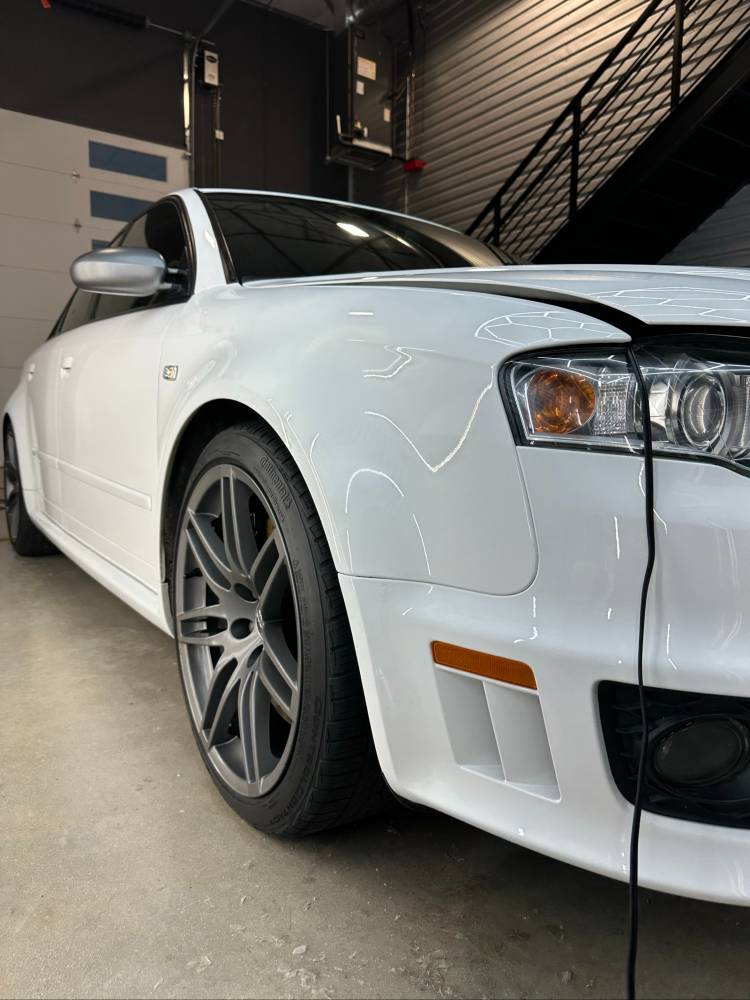
Step 5: Protecting It With a 15,000-Mile Ceramic Coating
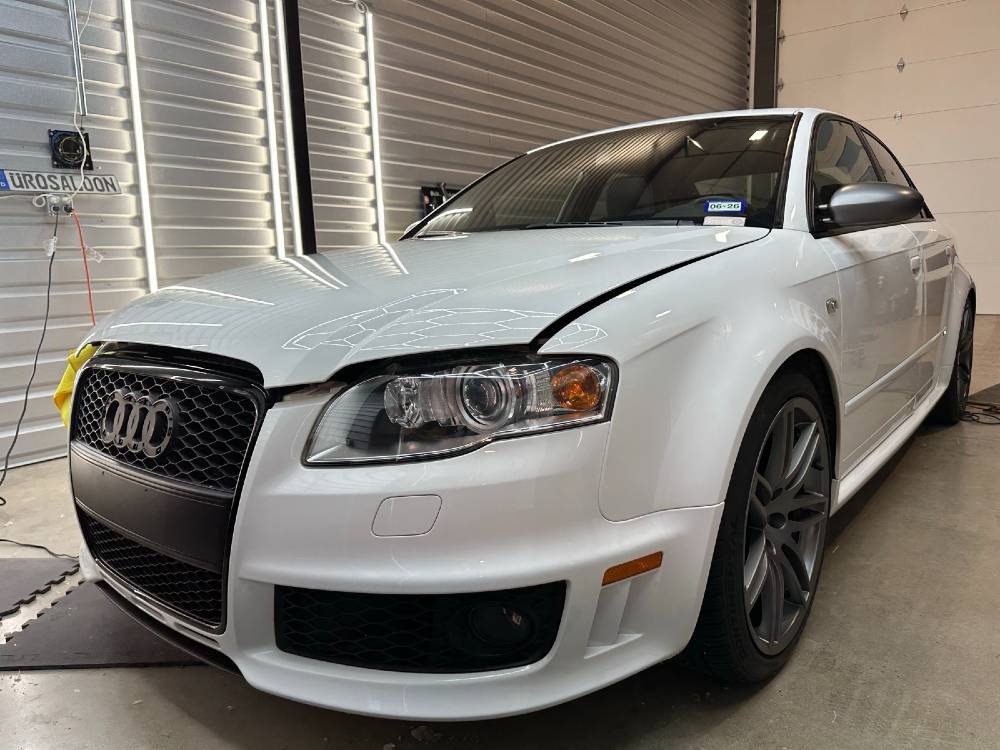
We always like to finish with some form of ceramic protection. Our options range from a 15,000-mile durability coating up to coatings rated for 60,000 miles and beyond. This owner does not drive the RS4 much, so a 15,000-mile ceramic coating was more than enough to keep the fresh paint glossy, slick, and easy to wash.
If you want to see the kind of coatings and prep products we trust, browse the ceramic coatings section of our Glossary Shoppe, or learn more about professional ceramic coating in Boerne, San Antonio and New Braunfels.
The Details That Make a White Car Look New Again
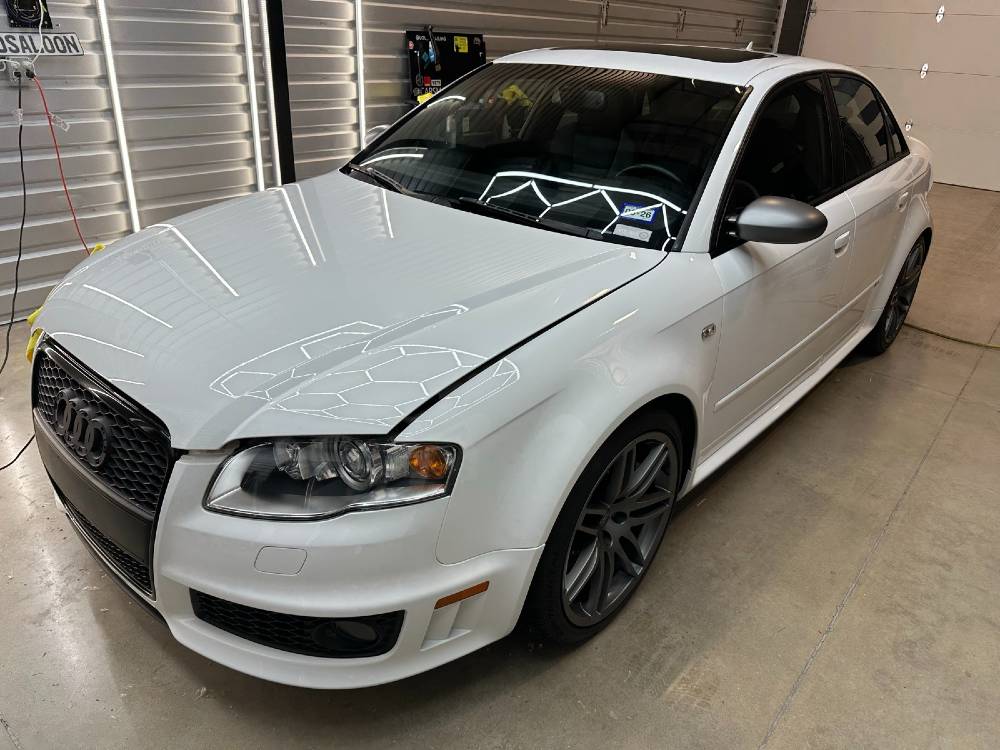
A white car that has not been properly cared for in years collects dirt in every crack and crevice. Emblems, the seams where two panels meet, and especially the door jambs all needed real attention on this RS4. The interior had been well kept, which was a nice surprise.
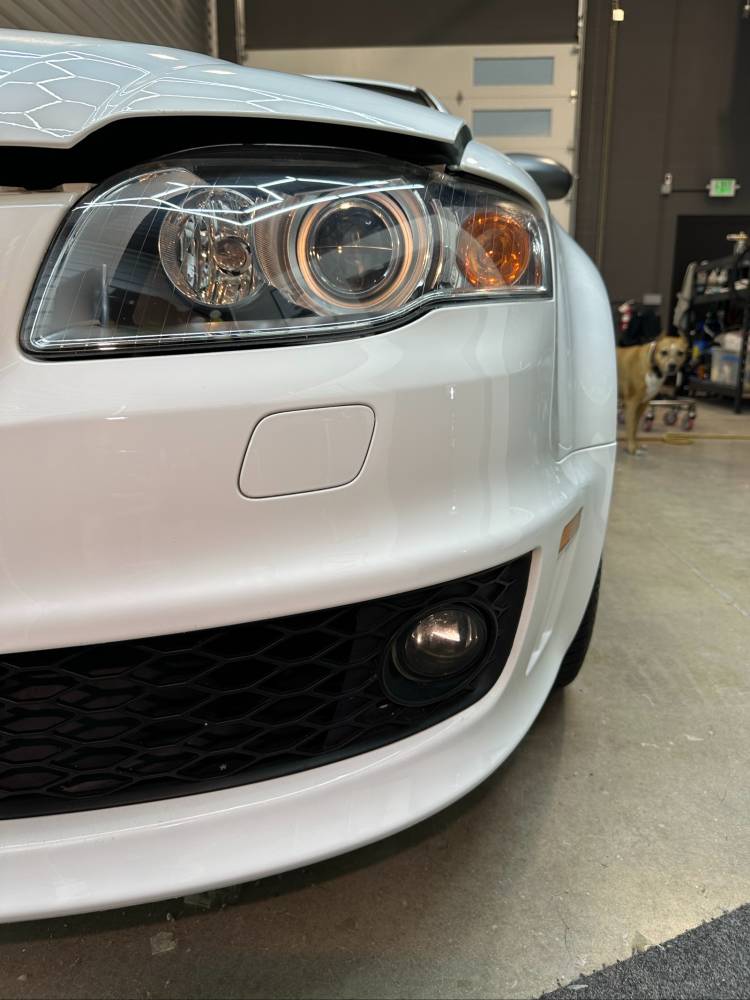
We also noticed the front Audi badge was chipping, so we removed it, re-sprayed it, and reinstalled it so it matched the rest of the refreshed car. Small things like that are what make the final result feel complete.
Should You Remove Old PPF or Replace It?
If your film is yellowing, cracking, peeling at the edges, bubbling, or holding stains that will not wash out, it is time to take it off. The longer aged film stays on, the more brittle it gets and the harder (and more expensive) it is to remove.
Once it is off, you have two good options: polish and coat the paint like we did here, or install new film. Modern films are a big step up from what was on the market 15 years ago, including self-healing PPF that hides light swirls with heat. If you go with new film, the paint underneath needs to be right first. Our guide to paint prep before PPF explains why that step matters so much, and what paint protection film is covers the basics.
Need PPF Removal or New PPF Near Boerne?
Whether you have old film that needs to come off safely or you want fresh protection on a new or newly corrected car, we can help. Carsmotology installs and removes paint protection film in Boerne, San Antonio and New Braunfels, with the paint correction and ceramic coating work to back it up.
As for this RS4, the owner was thrilled with the result, and so were we. Jen even let them know that if they ever decide to sell it, we might be interested. Get in touch for a PPF quote and tell us what you are working with.